Does our impact strategy hold in a drier world?
I’ve been at Breega for nine years. In 2019, a few of us created a CSR taskforce here, I was one of the early members, and today I wear both hats: CFO and Head of CSR. I was asked a couple of times if the two roles ever clashed… And my motto has always been: no, because ESG and Impact ultimately serve financial performance.
Numbers don’t lie, we cross-referenced our data across more than 120+ portfolio companies, and it was clear: the companies that perform best financially are almost always the ones that are good for our future too. (Check out our sustainability report here). A company which is bad for the world and still wins, that’s rare. We’ve got one or two exceptions in the portfolio, but mostly, whatever wasn’t good, or at the very least neutral, ended up being a bad investment as well: it failed, or got sold distressed. Cause or effect? I don’t know, probably a bit of both.
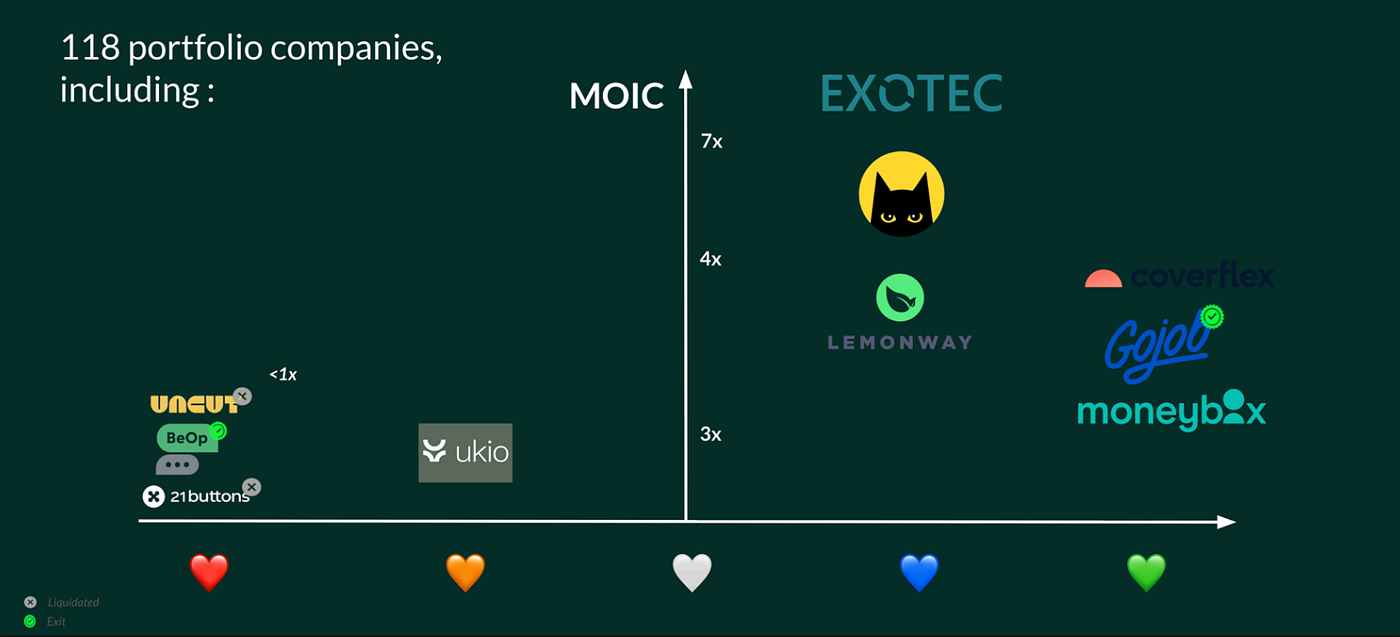
So that’s what I keep believing: act right, and the numbers tend to follow. That was easy to uphold when ESG was trendy and the market was flooded by money. The reality is different now, with a tighter fundraising environment, defensetech being the new eldorado, and 70% of our dealflow being “AI-washing”.
So where’s the line between running an impact strategy because it’s cool and trendy, and running one because you actually believe it?
Does your impact strategy survive when the money dries up?
CSR costs money, policies, time from top and middle management and people dedicated to it. And today there’s less money around than three to five years ago, when we could afford dedicated roles, including us at Breega. But I don’t think we’ve backed off on the practices themselves.
On the fundraising side, there was a lot of opportunism five years ago, when the market was flush: impact and climate funds were popping up everywhere. That trend has dried up now, and what’s filling the space instead is defense, sovereignty, AI, deeptech, reflecting the new expectations of LPs and probably society’s new concerns.
But I’d separate that from something that hasn’t gone away: a real shift in how private investors think about where their own money goes. People don’t want to fund fossil industries or projects that damage the planet anymore, at least in western Europe. I don’t think that will ever reverse.
Now a real question is: will an investor actually accept a potentially lower return to support something virtuous? We ask it directly in our onboarding questionnaire, and for most of them, return comes first, which is fair, it’s their money. But most of them also don’t want their money funding just anything. Offer our LPs a 10x that widens social gaps and speeds up climate change, and most would rather take a 2x or 3x without wrecking the planet.
At Breega, we’ve committed that 80% of invested amounts would go towards companies with positive impact for People, Planet and Society, and 0% invested in companies undermining these pillars, and we stand by that today.
Does your impact strategy survive the next thing everyone’s excited about?
Right now it’s AI, which is truly an industrial revolution. Beyond this fantastic tool, our CSR taskforce’s duty is to keep asking the purpose of it. AI is a tool, a “means of production” as Marx would have said. If the point isn’t to serve the world, I don’t think we should invest, because anything which is detrimental to the world eventually fails, even after an impressive raise or exit along the way. Aside from this philosophical reasoning, it is also a weigh probability against risk: I think it is less risky to back something that answers a real need, because there will be natural demand. So we still assess companies with the same impact grid, and take additional time to really deep dive into the real benefits and externalities, especially on edge-cases.
I got conflicted recently, when we had to assess an AI productivity tool for investors, bringing AI inside our own investment process. The advantage is real, it saves time, the output is clean and instant, and 90% of the time it raises the same questions your best analyst would. But if everyone’s using it, there’s no edge left, less need for juniors, and a whole generation of future investors at risk. Worse, these models are probabilistic, they predict what they already know, so an investment that looks like an outcast gets filtered out. This perspective of unique thinking truly scares me. Our best future is probably in between: use AI for faster and cleaner crunching and production, and save our human energy and thinking capacities for the edge-cases to increase quality, not necessarily volume.
Our biggest exits weren’t built on their original business model, most of them pivoted once or twice before exiting. What carried performance was management quality and resilience, which no AI, no deck, no model will ever see: the grit we look for in founders.
Does your impact strategy survive an external audit ?
This is why I care about B Corp. Because it is universal, I think it’s one of the only labels with real value, especially in finance, where most labels feel like a checkbox exercise. B Corp went into the micro detail: our HR policies, compensation policy, how we share value through carried interest, our purchasing policy. You can’t fake that many checkpoints if it isn’t part of how the company actually runs day to day.
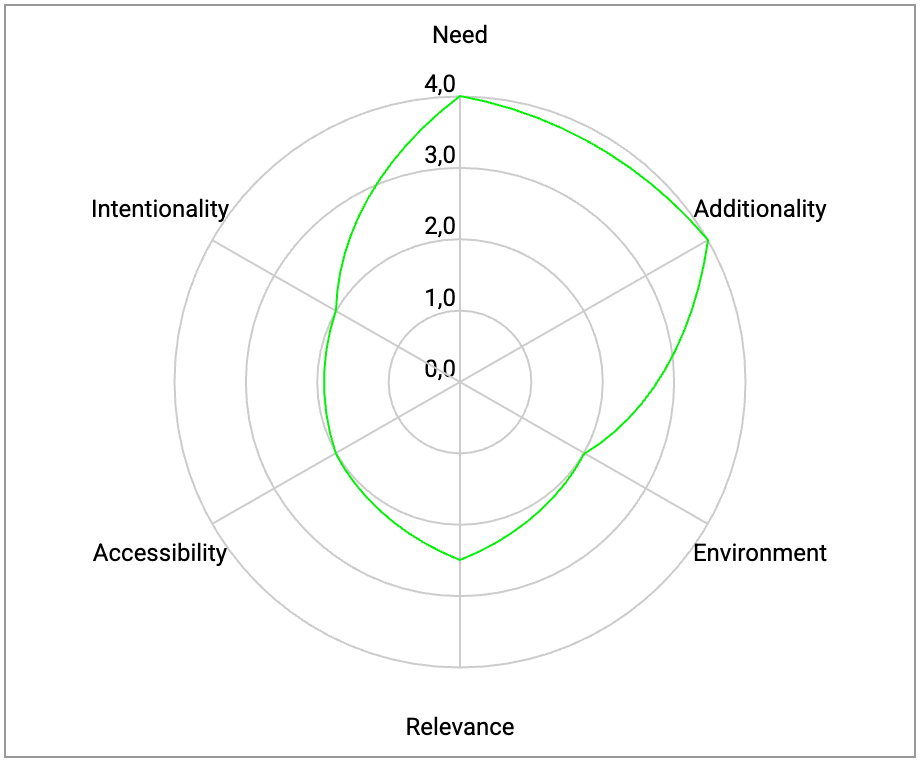
Same story for our internal investment veto process. Touching investment selection in a VC fund, when you’re not an investor, is always sensitive, so we started small: a non-binding study in 2020, then cross back-tests showing it didn’t change much and that LPs liked it. Over time the process got more democratic (more people voting) and more documented (built around a scientific scorecard across six criteria — then grouped into three pillars). And there’s been strong education across the teams, who are now well versed in the process. This vote has become a prerequisite before any decision, any term sheet and it’s precisely because it’s highly democratic, well accepted and documented, that we’ve had very few cases of investors coming back and saying, “I don’t agree with your vote.” The veto has no exceptions, not even for a deal pushed by a general partner (which has happened in the past) not even for one deemed “strategic” for other business reasons.
So, does it hold?
The reality is that Breega CSR ground was laid before I even joined in 2017. Our GPs were already giving 5% of carried interest across all its funds, the highest I know of; other VCs typically give maximum 1%. Because climate contribution became an urgency, in 2019 we added a giveback of 2% of annual net profit to environmental causes, and that was never debated either. It mattered to our founders to give back to the society that enables us to work.
So does our impact strategy hold? So far, yes. Keeping it that way is our CSR’s mission.


