How to Build Your Ideal Customer Profile (ICP) and Buyer Personas
"We did not think about ICP. I wish we did earlier on. It's one of my biggest mistakes." -- Mathilde Collin, co-founder and CEO of Front
What Is an Ideal Customer Profile (ICP)?
An ICP, or Ideal Customer Profile, is a detailed description of the perfect company or customer for your organization's products or services. It helps businesses identify and target the most promising prospects by outlining specific criteria such as industry, company size, budget, geography, and legal considerations.
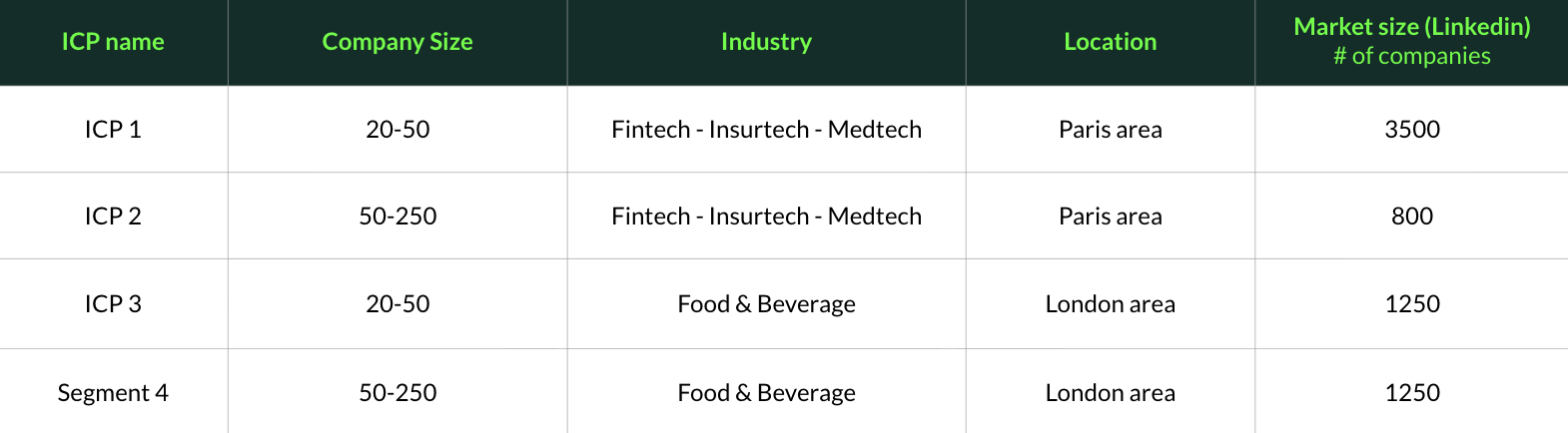
To simplify the process, we advise you to classify your ICPs as "Segments" regarding different criteria.
Why Should You Define Your ICP?
It has an impact on:
- Marketing: craft targeted campaigns that speak directly to the needs, pain points, and interests of the ideal customer.
- Sales: prioritize leads and prospects that closely match the ideal customer profile.
- Product: ensures products are tailored to address the target audience's challenges, leading to higher satisfaction and loyalty, while also identifying opportunities for innovation and enhancements to maintain competitiveness.
How to Build Your ICP: Methodology
To simplify the process, we advise you to classify your ICPs as "Segments" regarding different criteria.
Some examples of criteria you may use:
- Budget / Revenue / Company Size -- what is the lowest cost threshold that a customer would have to pay for your product or service?
- Industry -- are there specific industries that you work with? Are there industries that you don't work with?
- Geography -- which region do you target?
- Product or Service Limitations -- do you have a service level agreement (SLA) with your customers to meet a certain response time? If someone needs a response quicker, can you guarantee you'll be able to meet that demand?
- Market size
- Sales lifecycle
The idea is to come up with 4-5 segments maximum before prioritizing.
Example:
What Is a Buyer Persona?
Once you have established your ICP, the next step is to create buyer personas within that framework.
A buyer persona is a semi-fictional, generalized representation of your customers that account for the demographics, goals, motivators, and challenges they are facing.
Personas add depth and individuality to your understanding of customers, allowing for personalized marketing and sales approaches.
A company might have anywhere from two to five personas.
When trying to determine the number of buyer personas your organization should have, it's a common mistake to create a new persona for each job title that your teams communicate with.
Instead of having job title-specific personas, such as Marketing Manager Mary or Sales Rep Sam, you want to consider different challenges the individuals are facing and create personas like Recent Grad Rachel, Tech Heavy Tom, or Start-up Steph.
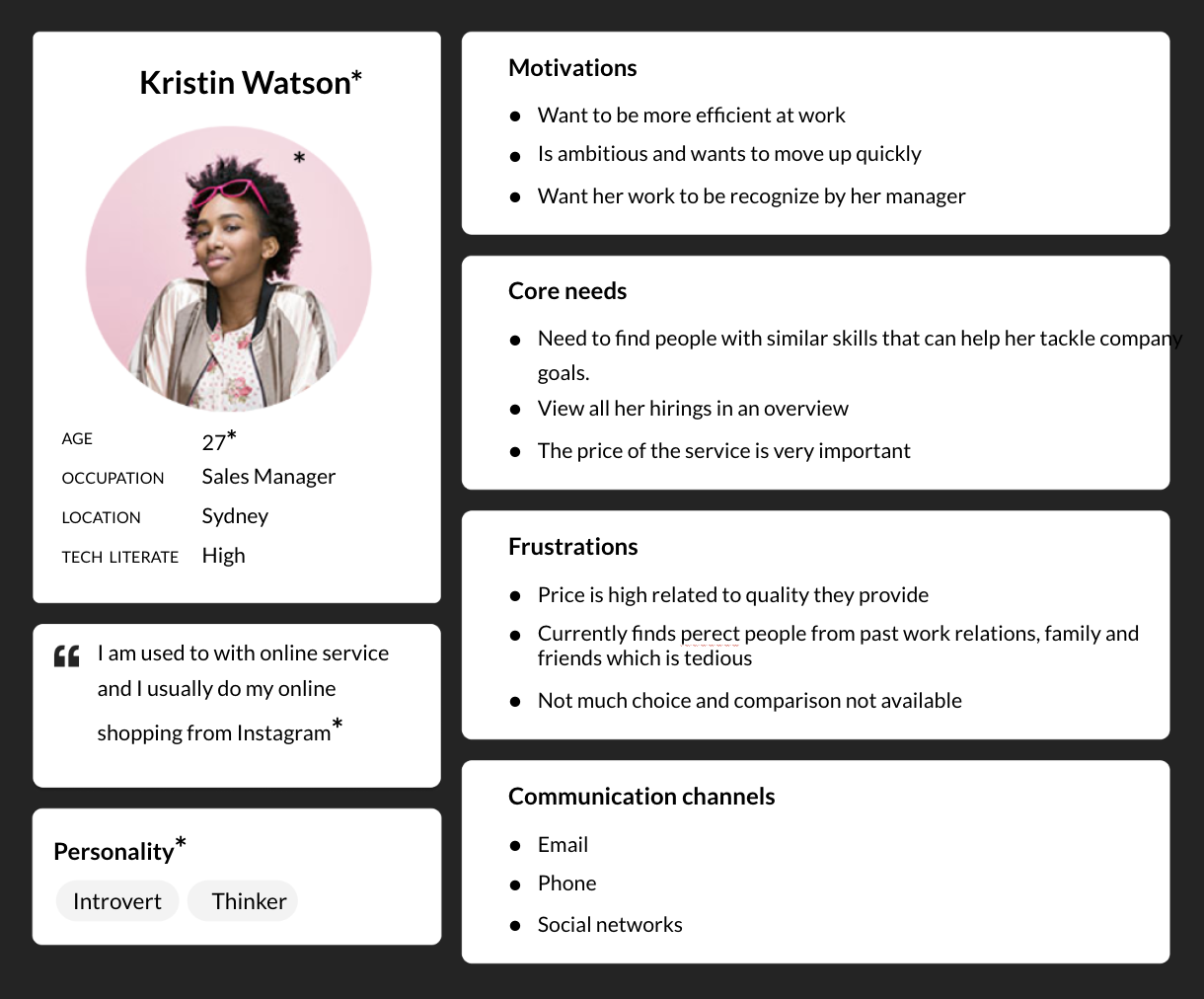
Please find on next slide a persona example and a template. All elements with (*) are optional according to us (finding a name or a picture is not important).
Example: Kristin Watson*
Frequently Asked Questions
Q: What is the difference between an ICP and a buyer persona?
An ICP defines the ideal type of company or organization to target, based on firmographic criteria such as industry, size, and geography. A buyer persona is a semi-fictional representation of an individual decision-maker within that company, defined by their goals, challenges, and behaviors.
Q: How many ICPs or buyer personas should a company have?
Most companies benefit from defining 4-5 ICP segments and between two to five buyer personas. Creating too many risks diluting focus; the goal is to prioritize the segments most likely to convert and deliver long-term value.
Q: How does an ICP improve sales and marketing alignment?
A clearly defined ICP gives both sales and marketing teams a shared understanding of who to target. Marketing can craft more relevant campaigns, while sales can prioritize outreach toward leads that most closely match the profile, reducing wasted effort and improving conversion rates.


